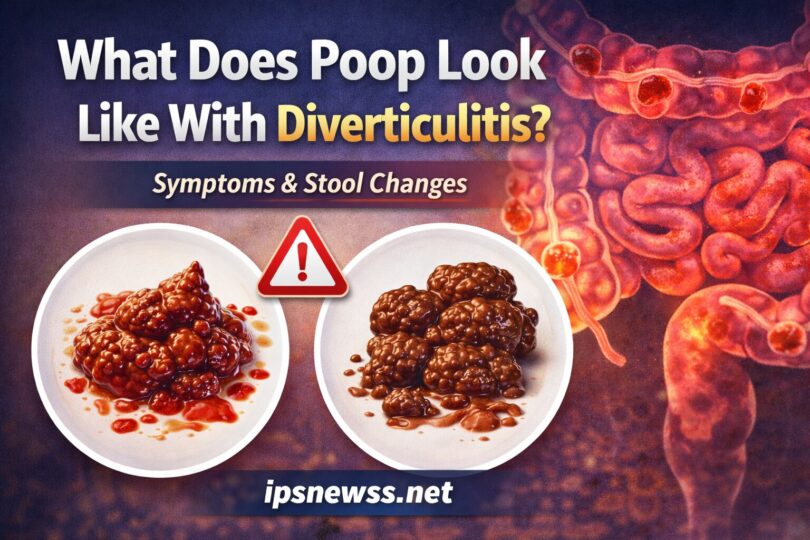

Diverticulitis can cause noticeable changes in your poop like differences in color, shape, smell, texture, and frequency. These changes can happen because the inflammation and infection in the colon affect how wastes move through your digestive system.
Many people feel worried when they feel changes in their bowel movements. However, understanding these changes can help you recognise symptoms early and seek medical care when needed.
This guide will explain everything you need to know about what does poops look like with diverticulitis, warning signs, causes, when to see a doctor, and how to manage these symptoms.
What is diverticulitis?
Diverticulitis occurs when small pouches in the colon known as diverticula become inflamed or infected. These pouches form in the weak areas of colon walls and are more common as people age.
Having these pouches alone is called diverticulosis. Many people have diverticulosis without any symptoms. However, when food particles, bacteria, or stool become trapped in these pouches they become infected and the infected condition is known as diverticulitis.
Conditions that diverticulitis can cause:
Abdominal pain (it is usually on the left side of abdominal cavity)
Fever
Nausea
Constipation or diarrhoea
Changes in poop appearance
Because the colon plays a major role in stool formation so a little infection may affect the bowel movements.
Normal poop vs Diverticulitis poop
Before knowing the diverticulitis poop, it is essential to know how a normal poop look like:
Healthy stool typically has
Color: medium to dark brown
Smell: strong but not extremely foul
Shape: long and sausage like
Texture: soft but formed
Frequency: once to three times daily or several times weekly
What does poops look like with diverticulitis?
When you develop diverticulitis, these characteristics may change significantly.
Diverticulitis poop color changes
Bright red blood in stool
One of the most alarming signs of diverticulitis is bright red color in stool. This happens when diverticula bleeds or develops a small tear.
You may notice
- Bright red color streaks on stool
- Blood in toilet water
- Blood on toilet paper
Bright red blood means the bleeding is coming from the lower recturm or colon. These symptoms should be taken seriously and discussed with a healthcare provider.
Black or Tarry stool
Black or tarry stool may indicate bleeding higher in the digestive tract. When the blood travels through the digestive tract, it gets digested and becomes dark. Black stool caused by bleeding often appears:
- Sticky
- Dark black
- Foul smelling
This type of stool indicates internal bleeding and requires immediate medical attention.
Maroon or Dark red stool
Maroon or dark red stool lies between black and bright red stool. This usually suggests bleeding from the middle portion of the colon.
This color changes may appear as:
- Dark red stool
- Mixed brown and red stool
- Maroon colored bowel movement
Diverticulitis poop shape Changes
Thin or pencil like stool
Inflammation from diverticulitis can narrow the colon. When this happens, the stool may become pencil-like or thin. This occurs because the stool is squeezed through a narrow area. Thin stool may indicate:
- Color inflammation
- Partial blockage
- Stricture formation
Pellet shaped stool
Some people with diverticulitis experience constipation. This can lead to small, hard pellet-like stools. Pellet stool may appear:
- Small and round
- Hard and dry
- Difficult to pass
This usually occurs when stool stays in the colon for too long and absorbs moisture.
Irregular or inconsistent stool
Diverticulitis may cause irregular stool shapes. You can notice
- Different shapes each time
- Broken stool pieces
- Inconsistent size
This happens when colon muscles do not function properly due to the inflammation.
Texture changes in poop
Hard and constipated
Constipation is usually caused when the diverticulitis flares up. The stool may become
- Hard
- Dry
- Difficult to pass
This happens when inflammation slows down the bowel movement and stool stays longer in the colon.
Watery diarrhoea
Some people explain the opposite symptoms which means diarrhoea.
- Loose
- Frequent
- Urgent
Diarrhea occurs when inflammation irritates the colon and speeds up digestion.
Mucous in stool
Mucous covered stool is another symptom of diverticulitis. You may see
- Slimy coating on stool
- Jelly like substance
- Mucous in toilet water
Mucous forms when the colon forms an extra protective lining during the inflammation.
Smell changes in diverticulitis
Diverticulitis poop usually smells worse than usual. It is mainly because of the inflammation and infection.
The infection can cause:
- Extremely foul smell
- Stronger smell
- Different smell than usual
This happens because of the multiplication of bacterias in diverticula.
Changes in bowel movement frequency
Diverticulitis can change how often you poop. Common pattern includes:
- Constipation
- Diarrhea
- Alternating constipation and diarrhea
- Frequent morning bowel movements
Some people experience multiple trips to the bathroom in a short time.
When diverticulitis poop is an emergency?
Certain conditions may require immediate medical attention. Seek immediate healthcare when you experience:
- Large amounts of blood in stool
- Black or tarry stool
- High fever
- Severe abdominal pain
- Sudden worsening symptoms
- Persistent vomiting
These signs may indicate complications such as:
- Abscess
- Perforation
- Severe infection
- Internal bleeding
Prompt treatment is required to avoid the complications.
Why diverticulitis changes your poop?
Diverticulitis changes your poop because inflammation changes how the colon actually works.
Several factors affect the poop
- Swelling which narrows the colon
- Infection increases the mucous production
- Hard stool irritates diverticula
- Muscle spasm affect the stool movement
- Bleeding changes stool color.
Mild diverticulitis vs severe diverticulitis
Mild diverticulitis may cause
- Slight constipation
- Mild abdominal discomfort
- Minor stool change
Severe diverticulitis
In severe condition, you may experience
- Blood in stool
- Narrow stool
- Diarrhea
- Mucous
- Severe Abdominal pain
How do doctors diagnose diverticulitis?
Doctor diagnose infection through several tests that includes
- CT scan
- Stool tests
- Blood tests
- Physical examination
Conclusion
So, what does poops look like with diverticulitis? The answer is, Diverticulitis may cause noticeable changes in the poop color, smell, texture, and frequency. While these changes may seem alarming, proper treatment can improve the condition.
Watch for alarming signs like blood stool, pain or discomfort. These symptoms may require immediate medical attention.
While early diagnosis, proper diet, and healthy lifestyle changes, most people recover from it and prevent future flare ups. If you notice any changes in stool which are unusual, don’t ignore them. Take immediate healthcare from doctors.